Skip to content
PedalSpokeCove

Gear That Earns Its Place

Cable Locks

The job: deterrence proportional to where the bike is left

A cable lock is a deterrent. It stops the opportunist who is walking past, it makes a bike a worse target than the unlocked one next to it, and it is quick enough that you will actually use it for a ten minute stop. It is not a defense against someone who arrived with tools and time. Being clear about that is the whole basis for choosing one, because the mistake is not buying a cable lock, it is leaving a bike somewhere that needed more than one.

Some links on this page go to Amazon. If you buy through one, this site earns a commission at no extra cost to you. It does not change what gets recommended, and nothing here is paid placement. Affiliate Disclosure.

How to choose one

Start from where the bike gets left

A cable in sight of a cafe window for fifteen minutes is a sensible tool. The same cable overnight on a city street is not. Match the lock to the worst case you will actually use it for, and if that worst case is an unattended overnight stop, this is not the category you want.

Length decides what you can lock to

Four feet locks a frame to a decent rack. Six feet goes around a frame, a wheel and an awkward object, or around two bikes. Most people who end up frustrated with a cable lock bought one too short for the racks on their route, and the extra length costs weight rather than money.

Diameter is the deterrent, and it costs bulk

A thicker cable takes longer to get through and looks harder from across the street, which is most of what a cable lock is doing. It is also heavier and stiffer to thread through a wheel. Where a listing does not state a diameter, you are buying an unknown.

A bracket is what makes it get used

The best lock in the world does nothing in a drawer at home. A mounting bracket or a self-coiling design that stays on the bike is the difference between a lock you own and a lock you use, and it is worth more than a small increase in cable diameter.

Compared

What the listings state

Cable Locks — as stated in each listing
ProductLengthLockingCable and mounting
Master Lock 8122D Cable Lock, 6 ftLongest stated6 ft4-digit set-your-own combination1/2 in vinyl-coated braided steel
Titanker Self-Coiling Cable Lock, 4 ftEasiest to carry4 ftCombination8 mm self-coiling, bracket included
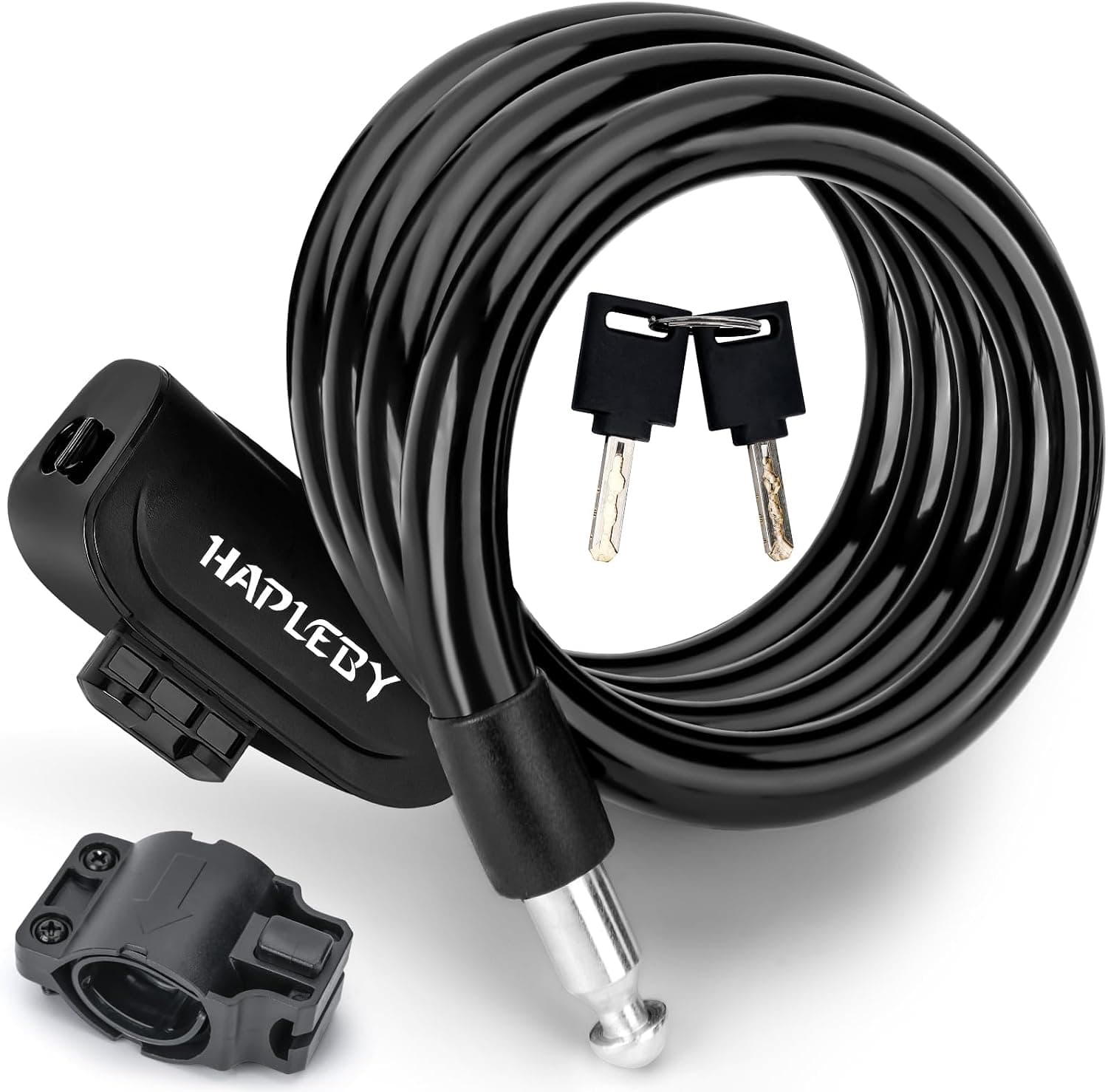
Hapleby Keyed Cable Lock, 4 ftKeyed, not combination4 ftKeyed, two keysBracket included
Master Lock 8143D Combination Cable LockNot statedCombinationNot stated
Amazon Basics Weather Resistant Cable Lock, 70 in70 inNot stated8 mm, weather resistant
Bike Cable Locks 2-pack, 2 ft x 1/2 in2 ft each, two locks4-digit resettable combination1/2 in self-coiling, no bracket

Longest stated

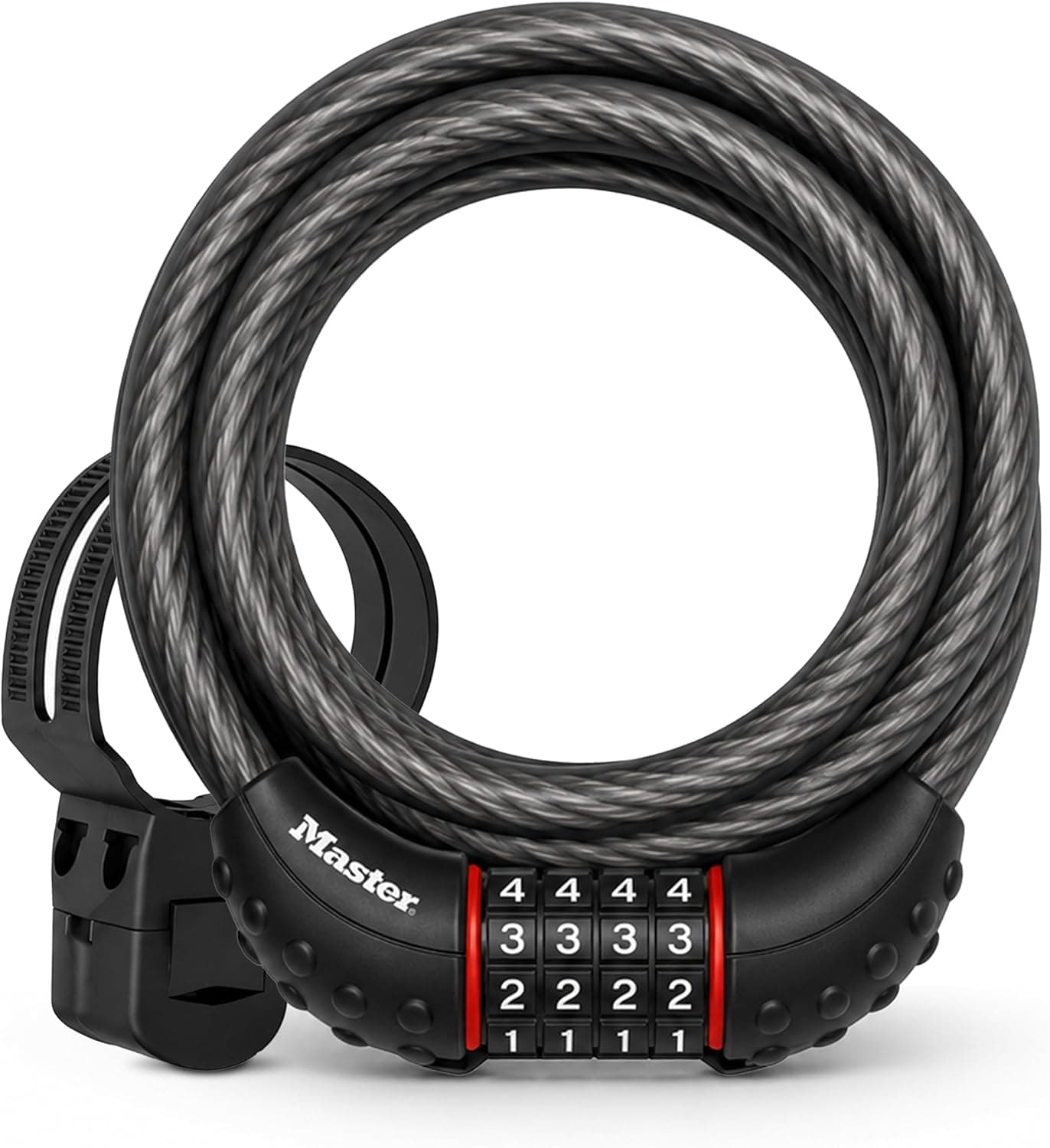
Master Lock 8122D Cable Lock, 6 ft

Master Lock 8122D Cable Lock, 6 ft

Key spec · 6 ft, 1/2 in, set-your-own combination

At 6 ft it states the greatest length in this group, and its 1/2 in diameter matches the thickest cable here. Length is what decides how many bikes and what kind of rack a cable can actually reach around.

Six feet of half-inch vinyl-coated braided cable with a combination you set yourself. The length is the point: six feet goes around a frame, a wheel and a rack together, or around two bikes, which is what most cable locks are actually asked to do. Vinyl coating keeps it from marking paint.

Works in its favor

  • Six feet is long enough for a frame, a wheel and an awkward rack in one loop
  • A set-your-own combination, so there is no key to lose and no factory code to keep
  • Vinyl coating protects the frame finish where the cable rests
  • The thickest cable stated in this group at 1/2 in

Worth knowing first

  • A cable lock of any diameter is a deterrent, not a defense against a determined attack with tools
  • Six feet of half-inch cable is bulky and heavy to carry every day
  • The listing does not state a mounting bracket

Best for
Locking to awkward racks, or locking two bikes together, in places you can see them.
Check it on Amazon

Easiest to carry

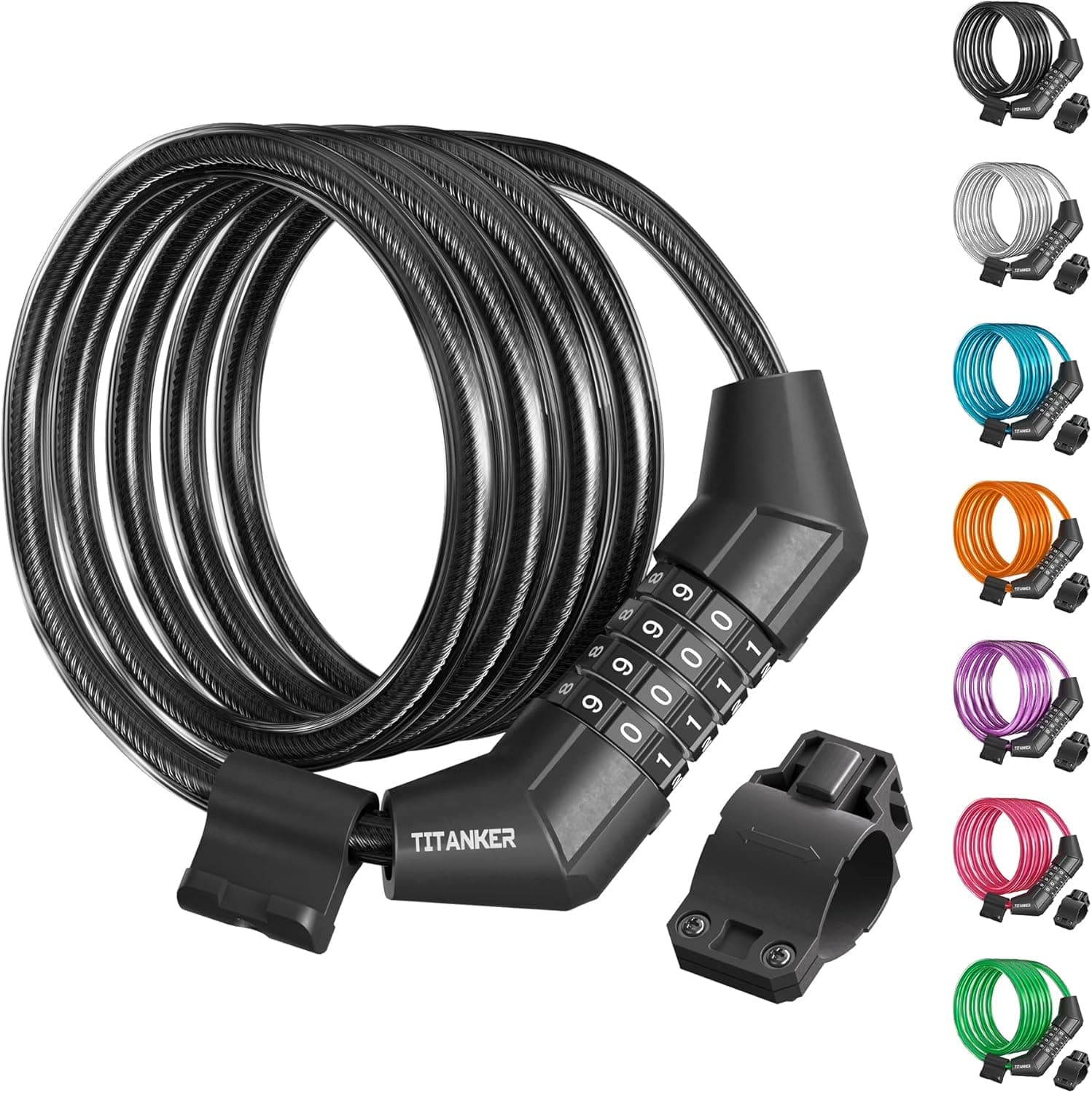
Titanker Self-Coiling Cable Lock, 4 ft

Titanker Self-Coiling Cable Lock, 4 ft

Key spec · 4 ft, 8 mm, self-coiling, bracket

At 4 ft and 8 mm it is the smallest cable stated here, it self-coils rather than tangling, and the listing includes a mounting bracket so it rides on the bike instead of in a bag.

A self-coiling four-foot cable in 8 mm with a bracket to carry it on the frame. Self-coiling cable springs back into a tight loop instead of becoming a tangle in a bag, and the bracket means it is on the bike when you need it, which is the only version of a lock that ever gets used.

Works in its favor

  • Self-coiling, so it packs itself instead of tangling
  • A mounting bracket is included, so it lives on the bike
  • Small and light enough that carrying it is not a decision
  • Combination rather than a key, so nothing to lose

Worth knowing first

  • At 8 mm this is a light cable, suited to short stops in sight of the bike
  • Four feet limits what it can reach around
  • A self-coiling cable is stiff and can be awkward to thread through a wheel and a rack together

Best for
Short stops on a familiar route, where the lock that gets carried beats the lock that stays home.

Check it on Amazon

Keyed, not combination

Hapleby Keyed Cable Lock, 4 ft

Hapleby Keyed Cable Lock, 4 ft

Key spec · 4 ft, keyed, two keys

The only keyed lock in this group, and the listing states two keys and a mounting bracket. A key is faster in the cold and in the dark than lining up four dials.

A four-foot keyed cable with two keys and a bracket. Keys and combinations trade the same problem back and forth: a combination cannot be lost but is slow in gloves and in the dark, and a key is instant but has to be somewhere. Two keys means one can live at home.

Works in its favor

  • Faster to open than a combination in gloves, in the rain, or in the dark
  • Two keys supplied, so a spare can stay at home
  • A mounting bracket is included so the lock rides on the bike
  • Nothing to forget, which matters on a lock used a few times a month

Worth knowing first

  • The listing does not state a cable diameter, so how substantial it is remains unknown
  • A key can be lost, and a lost key on a locked bike is a bad afternoon
  • Four feet limits what it can go around

Best for
A rider who prefers a key, and who will keep the spare somewhere other than the same bag.

Check it on Amazon
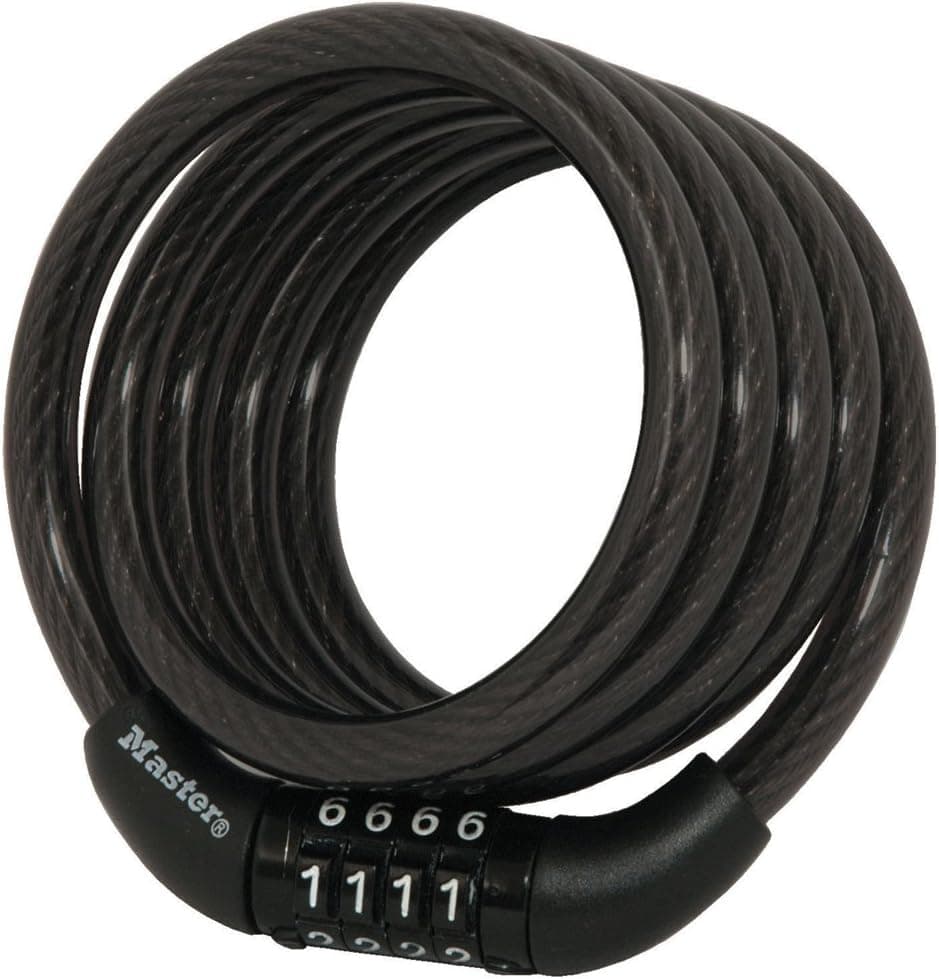
Master Lock 8143D Combination Cable Lock

Master Lock 8143D Combination Cable Lock

Key spec · Combination cable lock

A plain combination cable lock from a manufacturer that has been making them for a very long time. The listing states little beyond the type, so treat length and diameter as things to confirm rather than assume, and judge it by what a cable lock can do rather than by the specification.

Works in its favor

  • A combination, so there is no key to lose or duplicate
  • From a long-established lock manufacturer
  • Cable locks are quick to thread through a wheel and a rack
  • Simple enough that there is nothing to go wrong mechanically

Worth knowing first

  • The listing does not state a length, a diameter or a bracket
  • Any cable lock is a deterrent for short, visible stops rather than overnight security
  • Without a stated diameter it is hard to compare against the others here

Best for
A spare lock for a bike that gets left briefly, in daylight, somewhere you can see it.

Check it on Amazon
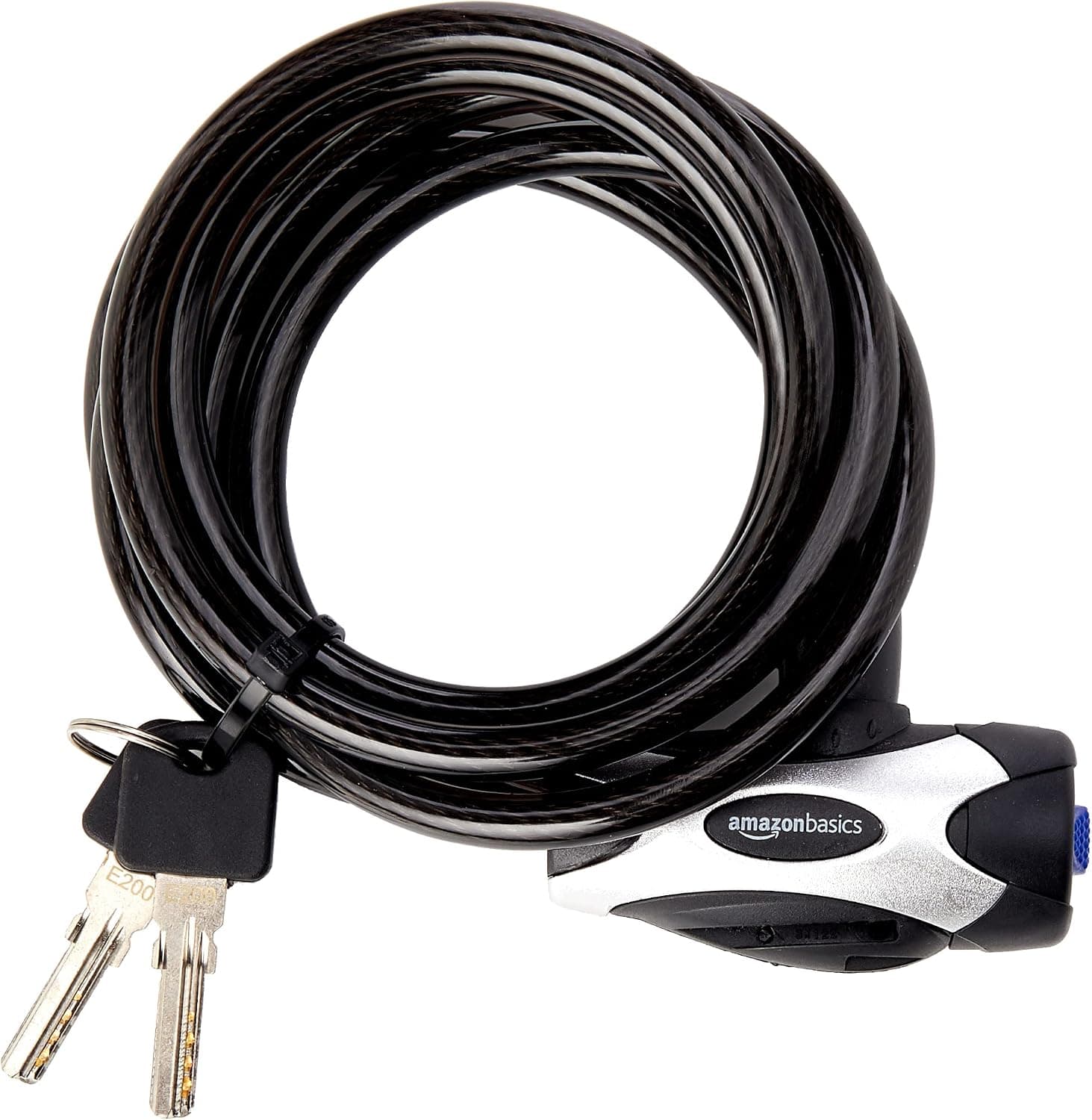
Amazon Basics Weather Resistant Cable Lock, 70 in

Amazon Basics Weather Resistant Cable Lock, 70 in

Key spec · 70 in, 8 mm, weather resistant

Seventy inches of 8 mm cable, stated as weather resistant, which matters for the lock this will actually be: the one that lives outside on the bike or the rack in the rain. Just short of six feet is enough to reach a frame, a wheel and most racks, in a diameter light enough to carry without noticing.

Works in its favor

  • At 70 in it reaches around a frame, a wheel and an ordinary rack together
  • Weather resistant per the listing, which suits a lock that lives outdoors
  • An 8 mm cable is light enough to carry daily without debating it
  • Both length and diameter are stated, so what arrives is what was compared

Worth knowing first

  • The listing does not state whether it locks by key or combination
  • An 8 mm cable is on the light end of this group, a deterrent for short visible stops
  • No mounting bracket is stated, so it travels in a bag

Best for
A bike parked outside in the weather, where cheaper locks rust and a light cable still gets used.

Check it on Amazon
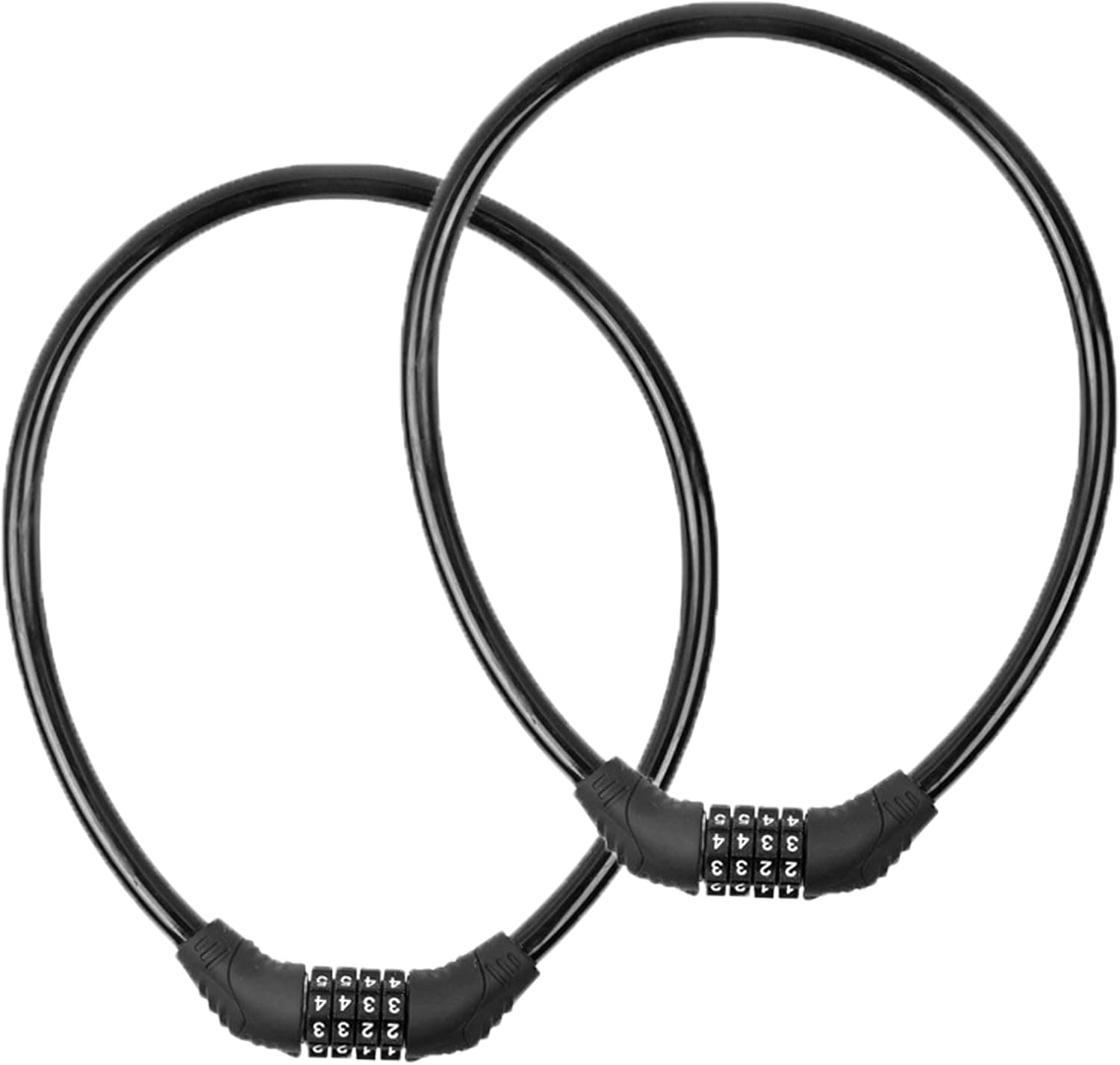
Bike Cable Locks 2-pack, 2 ft x 1/2 in

Bike Cable Locks 2-pack, 2 ft x 1/2 in

Key spec · 2-pack, 2 ft, 1/2 in, combination

Two short, thick self-coiling combination locks in one pack. At two feet each these do not go around a wheel and a rack together; what they do is put a half-inch cable on each of two bikes, or one on the bike and one on the helmet, with a resettable combination on both so the family can share one code.

Works in its favor

  • Two locks in the pack, so both household bikes get one
  • A 1/2 in diameter matches the thickest cable in this group
  • Resettable combinations, so both locks can share one memorable code
  • Self-coiling, so each packs down small enough to actually get carried

Worth knowing first

  • Two feet is short: frame to rack only when they nearly touch, and never around a wheel as well
  • The listing states no mounting bracket, so they ride in a bag or around the seatpost
  • A short, thick, self-coiled cable is stiff to thread through tight spots

Best for
Two bikes making short stops together, each needing its own quick deterrent on one shared code.

Check it on Amazon

Cable Locks: questions worth asking

For short, visible stops it is a reasonable tool and the one you will actually bother with. For anywhere a bike is left unattended for hours, or overnight, or in a place with a known theft problem, a cable is not the right level of protection and no diameter changes that.

A combination cannot be lost and is slow to work in gloves or in the dark. A key is instant and has to be somewhere, which is why locks that ship with two keys are worth noticing. Both are fine; pick the failure mode you would rather deal with.

The frame first, then a wheel if the cable reaches, and always to something fixed that a bike cannot be lifted over. A cable through a wheel alone leaves the rest of the bike walking away, and a cable around a sign post that ends four feet up leaves the bike being lifted off it.

It does not stop a theft, but it is what makes a recovered bike identifiable as yours. Record the serial number from under the bottom bracket, photograph the bike, and register it with a bike registry or your local police program.

They are easier to carry, because they spring back into a loop instead of tangling in a bag, which means they get carried more often. They are also stiffer to thread through a wheel and a rack together. It is a convenience trade, not a security one.

The jobs this gear belongs to

Links to Amazon on this page are affiliate links, which is how the site pays for itself. Prices and availability are not shown here because they change; check the listing. Affiliate Disclosure.