Skip to content
PedalSpokeCove

Gear That Earns Its Place

Pumps and Portable Inflators

The job: getting to an exact pressure without a shop floor pump

A pump is not really an air supply, it is a measuring instrument that happens to move air. Anything will get a tire hard. What decides whether a pump is worth owning is whether it will stop at the number you asked for, whether you can read that number without a flashlight, and whether it works in the place the tire actually went soft. Those three things are what the listings below get compared on.

Some links on this page go to Amazon. If you buy through one, this site earns a commission at no extra cost to you. It does not change what gets recommended, and nothing here is paid placement. Affiliate Disclosure.

How to choose one

Auto shut-off is the feature, not the pressure rating

A pump that stops at a set pressure turns inflation into a thing you do while looking somewhere else. Without it you are watching a small display and trying to release a trigger at the right moment, which is how tires end up ten psi over. A 150 PSI rating on a pump you have to watch is worth less than a 100 PSI rating on one that stops.

Decide where the flat happens

A corded 12V unit is cheaper, needs no charging, and is completely useless two miles from the car. A cordless unit solves that and introduces a battery that will be flat the one time you need it. Dual power units do both at the cost of size. Pick based on where your bike actually gets ridden, not on the specification sheet.

Check the rating against your narrowest tire

A 25 mm road tire wants pressures a pump built around car tires may struggle to reach comfortably. A 2.4 inch mountain tire wants volume rather than pressure, which is a different demand entirely. If the listing does not state a maximum pressure, that is a real gap for a road bike and mostly irrelevant for a fat tire.

Volume and duty cycle matter for wide tires

Filling a fat tire from flat asks a small inflator to run for a long time, and small inflators get hot. Where a listing states a duty cycle or a dual cylinder design, that is the manufacturer telling you it is meant to keep going. For narrow tires none of this matters much.

Group

Cordless and dual power

A battery on board, so the pump goes where the bike goes. Some of these also run from 12V, which removes the one real objection to a cordless unit.

Cordless and dual power — as stated in each listing
ProductPowerGaugeStops itself
AstroAI L7 Cordless Inflator, 150 PSIClosest to a floor pumpCordless batteryDigitalAuto shut-off
AstroAI H2 Pro Cordless InflatorMost ways to power itBattery and 12VDigitalAuto shut-off
ETENWOLF VORTEX S6 Cordless InflatorLargest stated batteryCordless battery, 19200 mAhDigital with LED backlightNot stated
Airmoto Cordless InflatorCordless batteryDigitalAuto shut-off
Lamicall Rechargeable Inflator, 150 PSIRechargeable batteryDigital displayAuto stop
CRAFTSMAN Cordless Inflator, 150 PSIBattery 6000 mAh and 12VDigitalNot stated
AstroAI Cordless Inflator, 160 PSIBattery and 12VDigitalAuto shut-off
Cordless Portable Tire InflatorCordless batteryNot statedNot stated

Closest to a floor pump
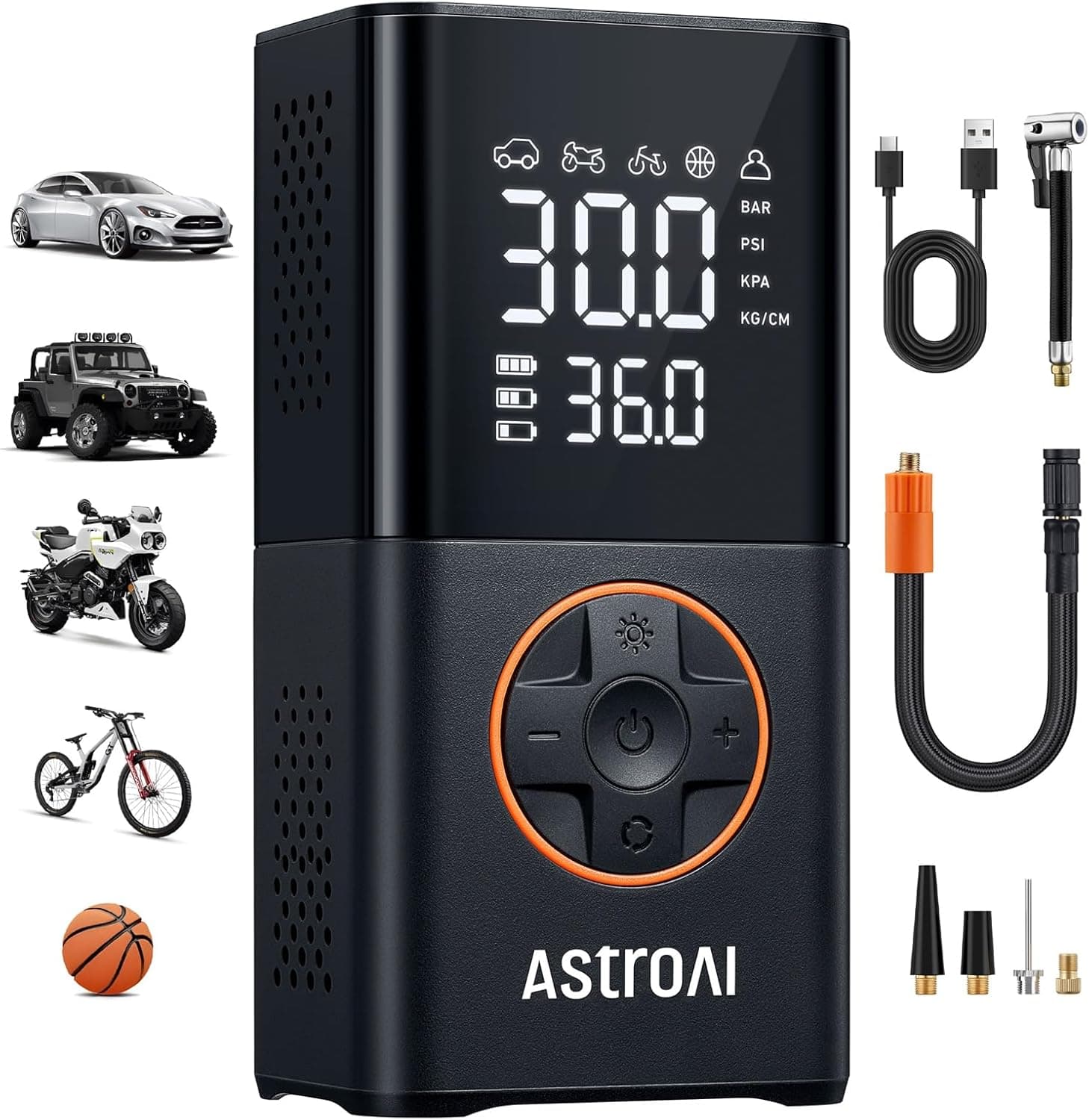
AstroAI L7 Cordless Inflator, 150 PSI

AstroAI L7 Cordless Inflator, 150 PSI

Key spec · Cordless, 150 PSI, auto shut-off

The listing states a digital pressure gauge with auto shut-off and names bikes among its uses. Setting a target and having the pump stop there is the whole difference between an inflator and a compressor.

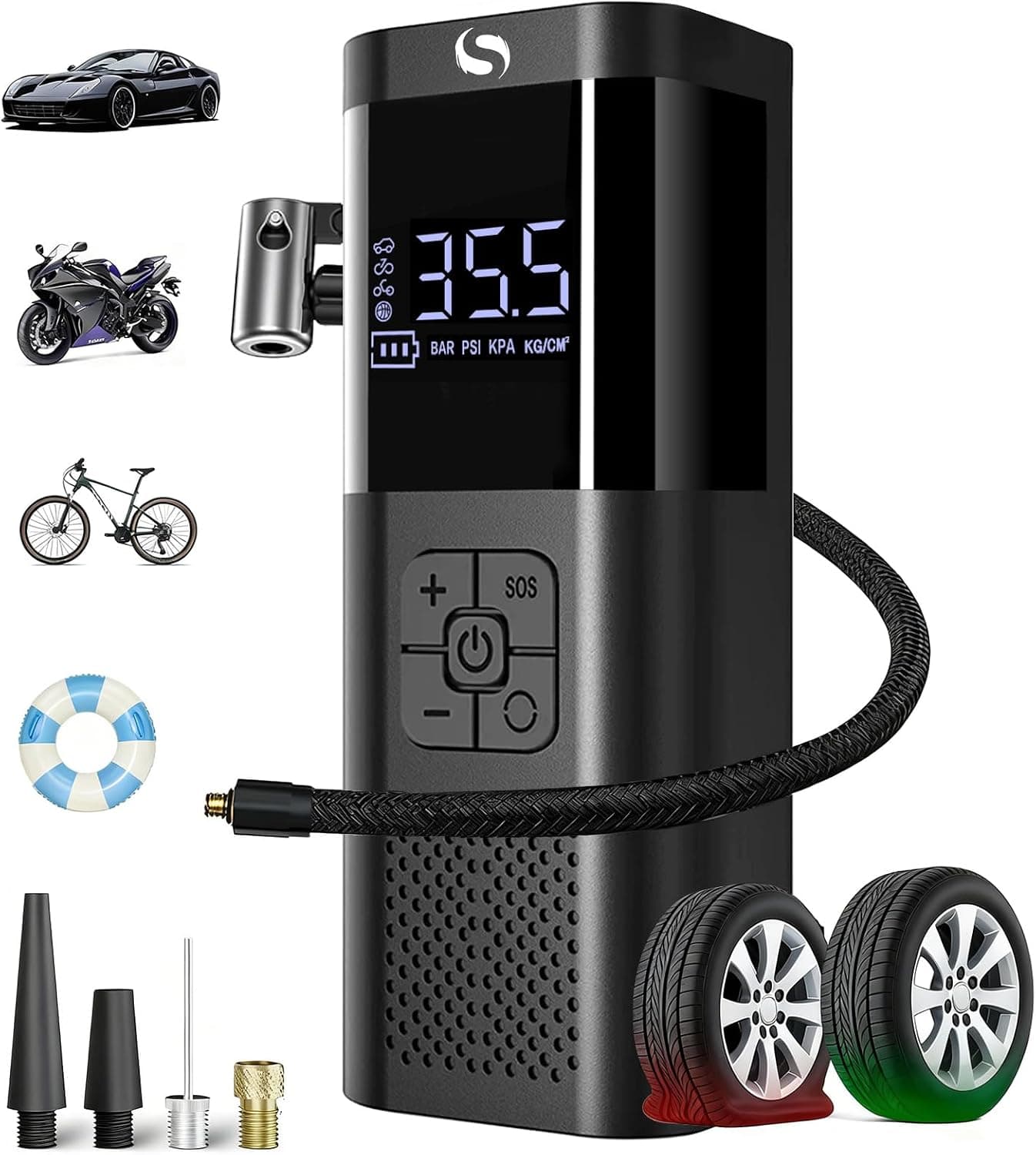
A cordless inflator with a digital gauge and an auto shut-off, which is the combination that lets you dial in a number and walk away. The listing rates it to 150 PSI and names bikes explicitly among its uses, so it covers road pressures as well as the low end. The LED light matters more than it sounds when the flat happens after dark.

Works in its favor

  • Auto shut-off means you set a pressure rather than watching a needle and guessing
  • The listing states a 150 PSI rating, which covers narrow road tires as well as wide ones
  • Cordless, so it works at the roadside and not only next to a car
  • A built-in LED light, which is the difference between fixing a flat and holding a phone in your teeth

Worth knowing first

  • The listing does not state a battery capacity, so runtime between charges is unknown
  • A small cordless unit takes noticeably longer to fill a large tire than a floor pump does
  • Digital gauges on inflators are convenient rather than laboratory accurate; a separate stick gauge is still worth owning

Best for
A rider who wants one device that sets an exact pressure at home and still goes in a pannier for the ride to work.
Check it on Amazon

Most ways to power it

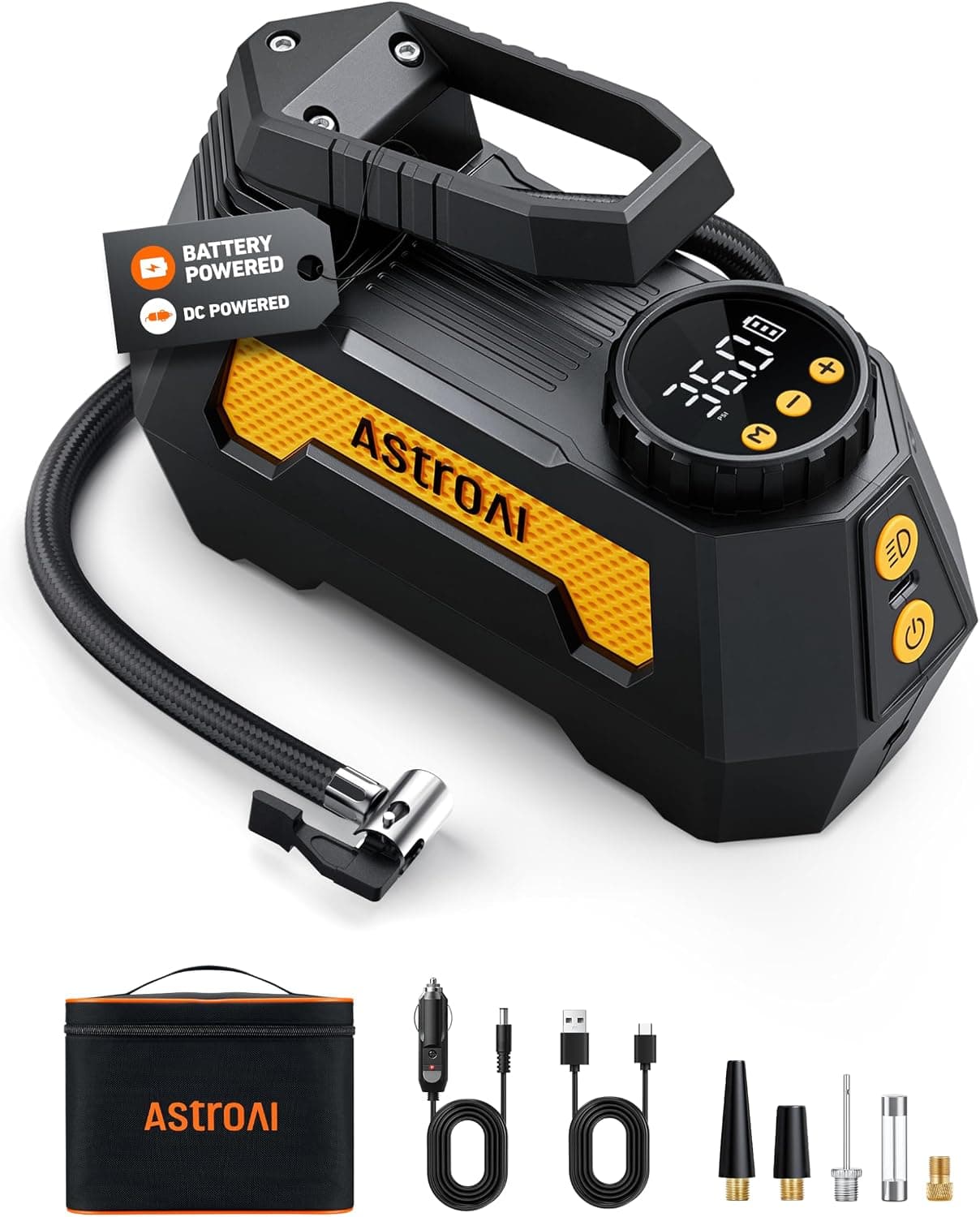
AstroAI H2 Pro Cordless Inflator

AstroAI H2 Pro Cordless Inflator

Key spec · Battery and 12V, auto shut-off

The listing states a dual power supply, battery and 12V, so this one works at the roadside and in a garage without a second purchase.

The same auto shut-off and digital gauge arrangement, with the useful addition that the listing states it runs from either its battery or a 12V supply. That covers the two situations that actually happen: a flat away from anything, and a long session topping up several bikes where a battery would run out.

Works in its favor

  • Dual power supply per the listing, so a flat battery does not end the job
  • Auto shut-off, which is what makes an inflator usable on a bicycle tire at all
  • Digital gauge rather than an analog dial
  • A 12V option means it doubles as the thing that lives in the car

Worth knowing first

  • The listing does not state a maximum pressure, so narrow high-pressure road tires are an unknown
  • Dual power adds bulk over a battery-only unit of the same output
  • No stated battery capacity, so how many tires it fills per charge is not published

Best for
A household with more than one bike and a car, where the same pump should work in the driveway and at the side of a road.

Check it on Amazon

Largest stated battery

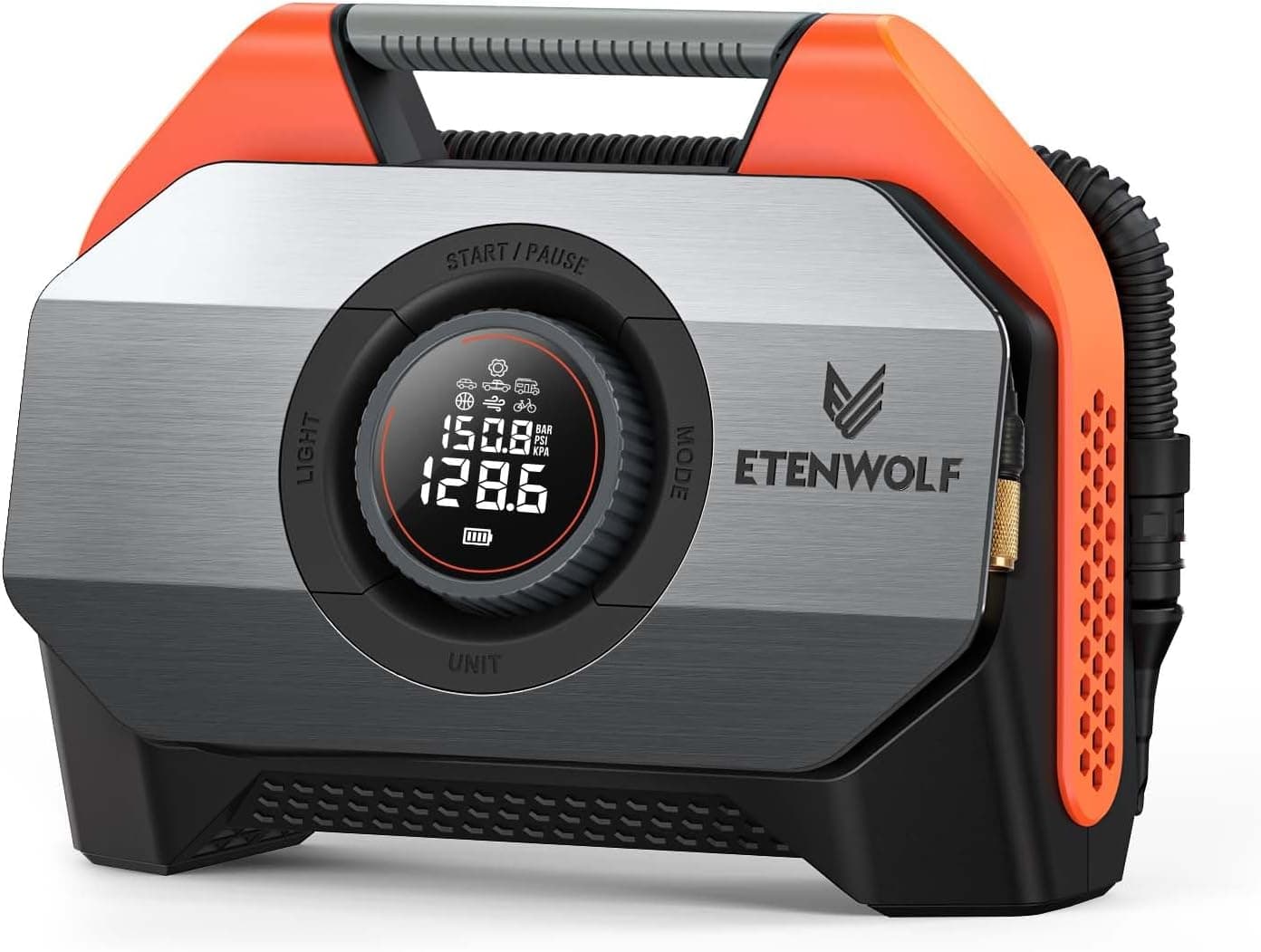
ETENWOLF VORTEX S6 Cordless Inflator

ETENWOLF VORTEX S6 Cordless Inflator

Key spec · 19200 mAh, dual cylinder

At 19200 mAh it is the only inflator in this group whose listing states a battery capacity at all, and it is a large one. Dual cylinders and a stated 100 percent duty cycle point at the same thing: filling several tires in a row.

The one in this group built around not stopping. The listing states a 19200 mAh battery, a dual cylinder pump and a 100 percent duty cycle, which together describe a tool meant to fill a lot of volume without a cooling break. For a household of bikes, or for fat tires, that is the specification that matters.

Works in its favor

  • A stated battery capacity, which almost none of the alternatives publish
  • Dual cylinder construction, which the listing ties to faster filling
  • A stated 100 percent duty cycle, meaning it is not expected to need a rest between tires
  • LED backlight on the display, useful in a dark garage as well as at the roadside

Worth knowing first

  • The listing does not state an auto shut-off, so you may be watching the display yourself
  • A big battery and two cylinders make this the least pocketable option here
  • No stated maximum pressure, so suitability for narrow road tires is not published

Best for
Filling several bikes at once, or fat tires, where a small inflator would run out of battery or need to cool down.

Check it on Amazon
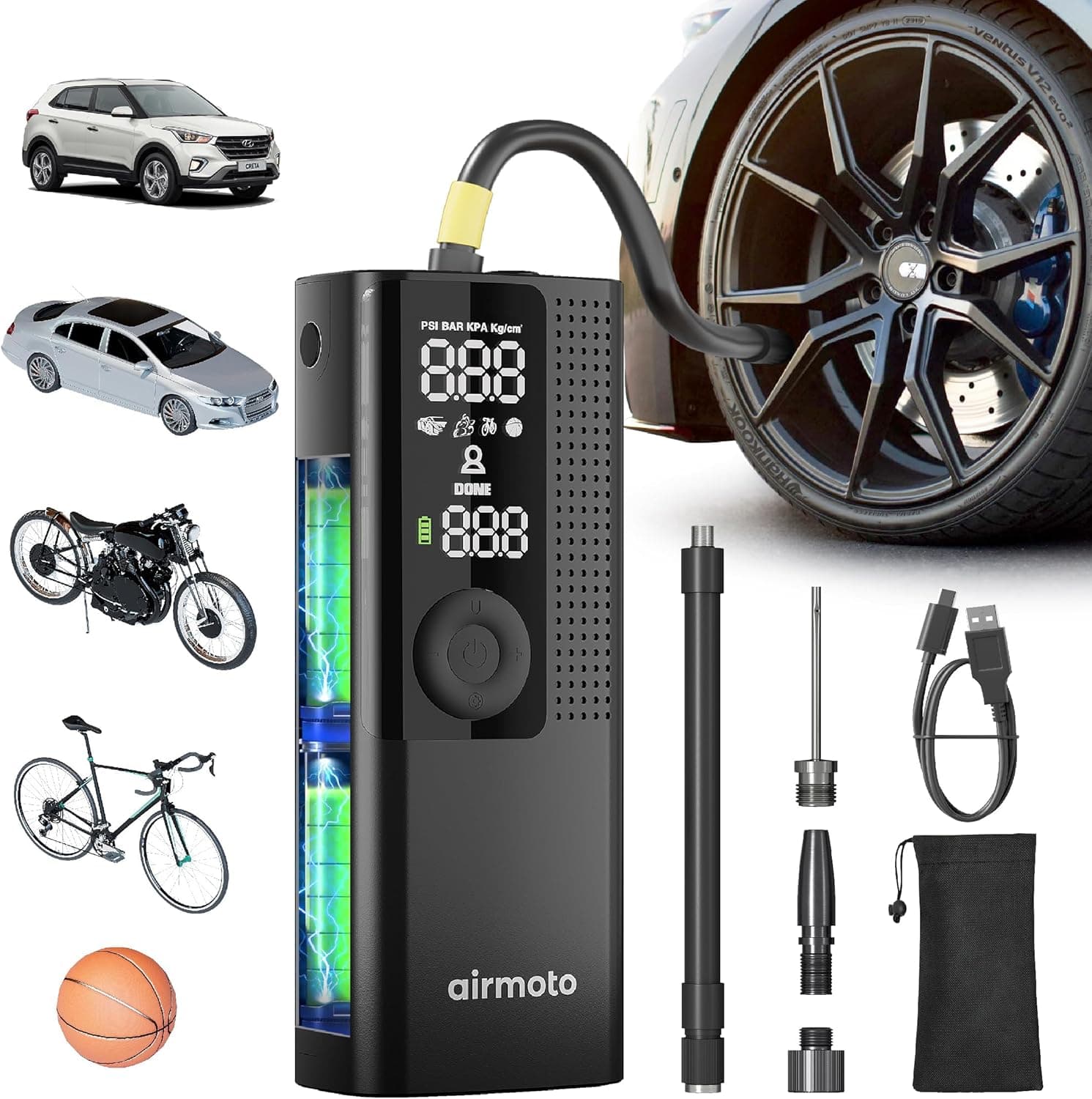
Airmoto Cordless Inflator

Airmoto Cordless Inflator

Key spec · Cordless, auto shut-off

A compact cordless inflator with the three features that make one usable on a bicycle: a digital gauge, an auto shut-off and a light. The listing keeps the specification short, which is honest enough, and what it does state is the part that matters at the roadside.

Works in its favor

  • Auto shut-off, so a pressure is set rather than watched
  • Digital gauge instead of a small analog dial
  • Bright LED per the listing, which is genuinely the feature you want at dusk
  • Small enough to be the one that actually gets carried

Worth knowing first

  • No stated maximum pressure, so road tire suitability is not published
  • No stated battery capacity or number of tires per charge
  • Compact inflators are slow on large volume tires by nature

Best for
A commuter who wants one small thing in the bag that covers a slow leak on the way home.

Check it on Amazon
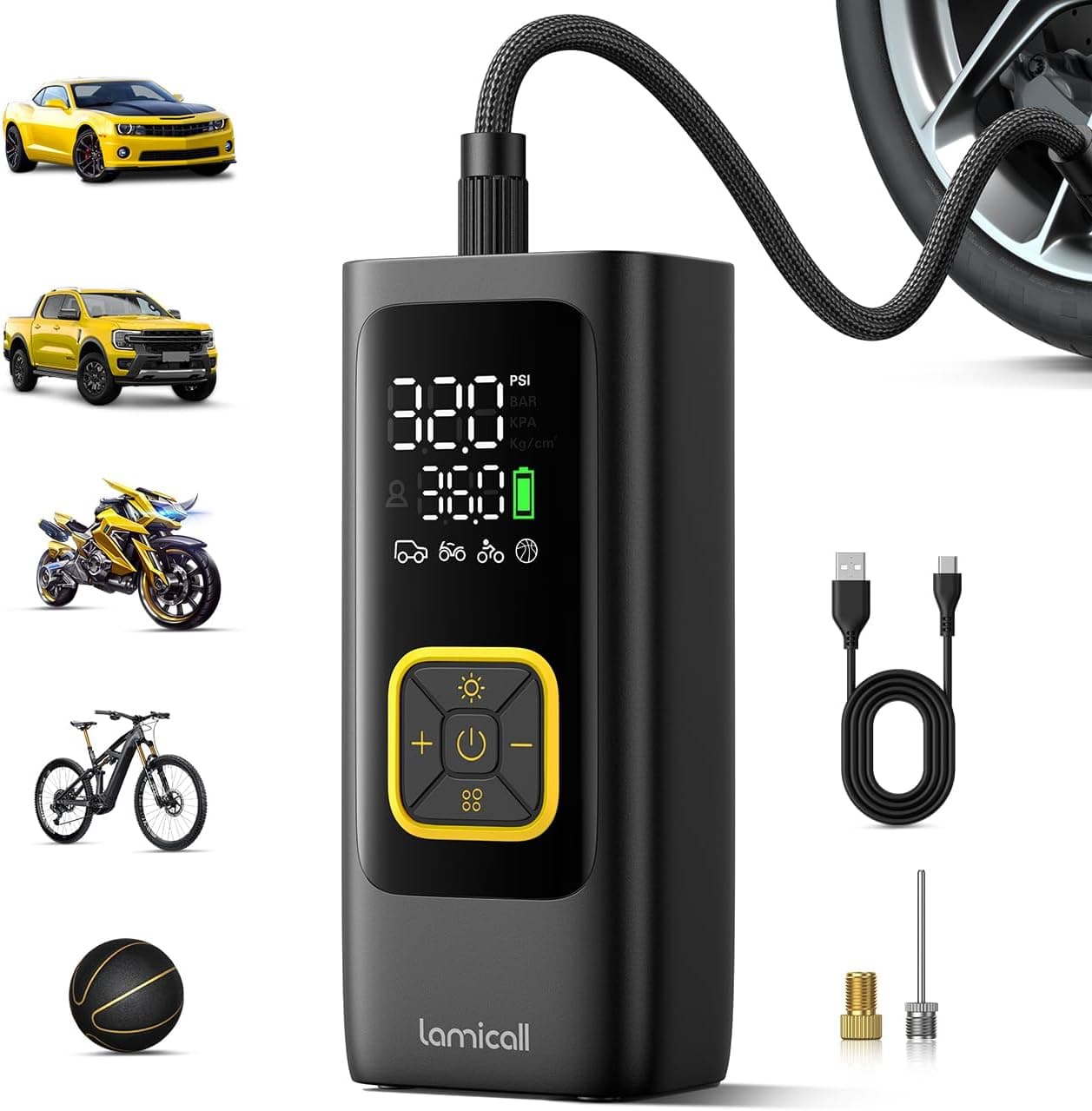
Lamicall Rechargeable Inflator, 150 PSI

Lamicall Rechargeable Inflator, 150 PSI

Key spec · Rechargeable, 150 PSI, auto stop

A rechargeable inflator with an auto stop and a stated 150 PSI rating, which puts road tire pressures inside its range. The pressure display and the light cover the two things you need when the tire went soft somewhere inconvenient.

Works in its favor

  • A stated 150 PSI rating, which many inflators in this group do not publish
  • Auto stop, so the pump ends the job rather than you
  • Pressure display on the unit itself
  • LED light included rather than sold as an accessory

Worth knowing first

  • No stated battery capacity, so charge life between tires is unknown
  • Recharge time is not stated in the listing
  • A rechargeable-only unit is dead weight once the battery is flat, with no 12V fallback

Best for
A rider on narrow, high-pressure tires who wants a cordless pump that reaches road pressures.

Check it on Amazon
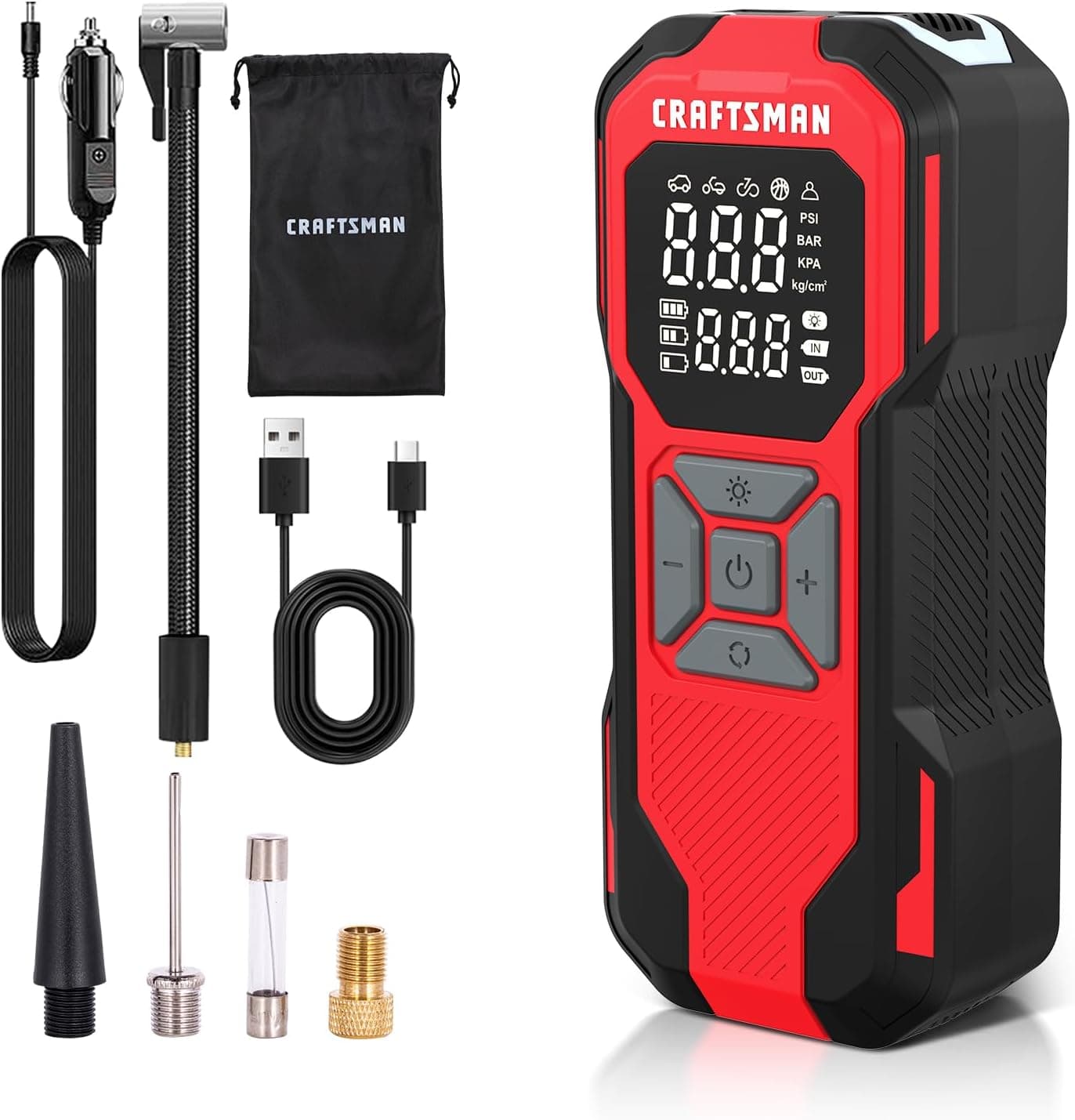
CRAFTSMAN Cordless Inflator, 150 PSI

CRAFTSMAN Cordless Inflator, 150 PSI

Key spec · 6000 mAh plus 12V, 150 PSI

One of only two inflators here whose listing states both a battery capacity and a 150 PSI rating, and it runs from 12V as well. That combination makes it predictable, which is worth more than a headline number when you are deciding whether it will finish the job.

Works in its favor

  • A stated 6000 mAh battery, so capacity is a known quantity rather than a guess
  • Runs corded from 12V when the battery is flat
  • A stated 150 PSI rating covers narrow road tires
  • Digital pressure gauge rather than an analog dial

Worth knowing first

  • The listing does not state an auto shut-off, so watch the display
  • Battery plus corded hardware makes it bulkier than a bag-sized inflator
  • At 6000 mAh the stated capacity is well below the largest in this group

Best for
A garage pump that occasionally goes in the car, where a known battery size beats a small case.

Check it on Amazon
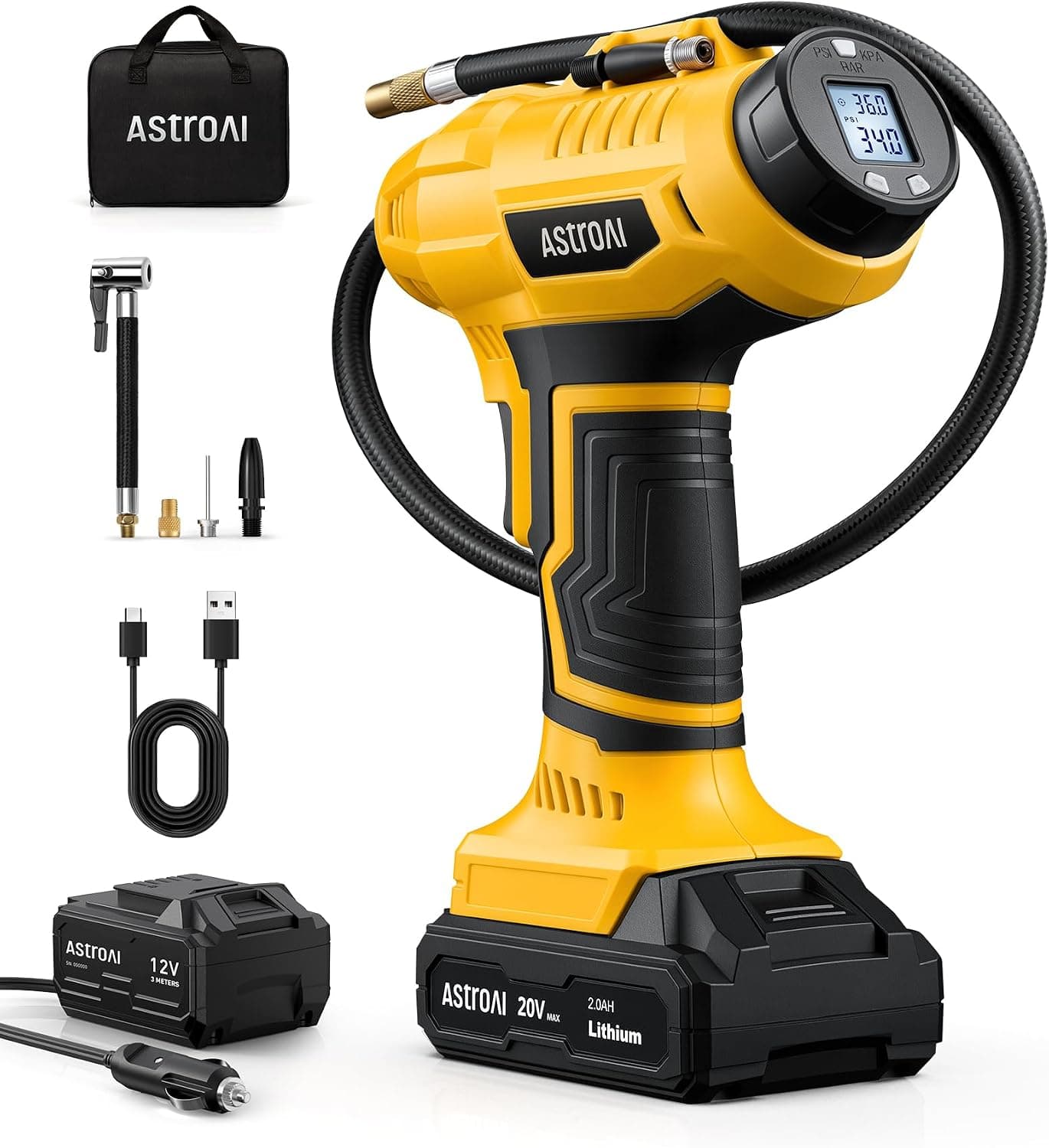
AstroAI Cordless Inflator, 160 PSI

AstroAI Cordless Inflator, 160 PSI

Key spec · Dual power, 160 PSI, auto shut-off

The highest stated pressure rating in this group at 160 PSI, with a dual power supply and an auto shut-off. Very few bicycle tires need anything near that ceiling, but headroom means the pump is not working at its limit when it fills a narrow road tire.

Works in its favor

  • A stated 160 PSI rating, the highest published figure among these inflators
  • Auto shut-off, so a target pressure can be set and left
  • Dual power supply, so a flat internal battery is not the end of it
  • Digital gauge rather than an analog dial

Worth knowing first

  • A 160 PSI ceiling is well beyond anything a bicycle tire should see, so it is headroom rather than usable range
  • No stated battery capacity
  • Dual power hardware adds bulk over a battery-only unit

Best for
Someone filling car and bike tires from the same pump who wants margin above road pressures.

Check it on Amazon
Cordless Portable Tire Inflator

Cordless Portable Tire Inflator

Key spec · Cordless, portable

A cordless inflator whose listing states very little beyond the two words that matter: cordless and portable. That makes it hard to place against the rest of this group, because the features that decide whether an inflator suits a bicycle, an auto shut-off, a stated pressure ceiling, a battery capacity, are simply not published here.

Works in its favor

  • Cordless, so it is not tied to a 12V socket
  • Portable per the listing, sized to travel with the bike rather than live in a garage
  • Nothing about it depends on a car being nearby
  • A simple device with little stated to go wrong

Worth knowing first

  • The listing states neither a maximum pressure nor a gauge type, so road tire suitability is unknown
  • No stated auto shut-off, which is the feature that makes an inflator usable on a bicycle tire
  • No stated battery capacity, so runtime per charge is a guess

Best for
A buyer choosing on size and price who is comfortable confirming the missing specifications on arrival.

Check it on Amazon

Group

12V corded

Powered from a car socket. Nothing to charge and nothing to age, in exchange for being tied to wherever the car is parked.

12V corded — as stated in each listing
ProductPowerGaugeStops itself
AstroAI AIRUN H 12V Inflator12V corded, 9.8 ftDigitalAuto shut-off
ROCGORLD R8 12V Inflator12V cordedDual digital screenNot stated
Inzeetor 12V Inflator, 150 PSI12V cordedDigital displayAuto shutoff
AstroAI AIRUN H 12V Inflator

AstroAI AIRUN H 12V Inflator

Key spec · 12V, 9.8 ft cord, auto shut-off

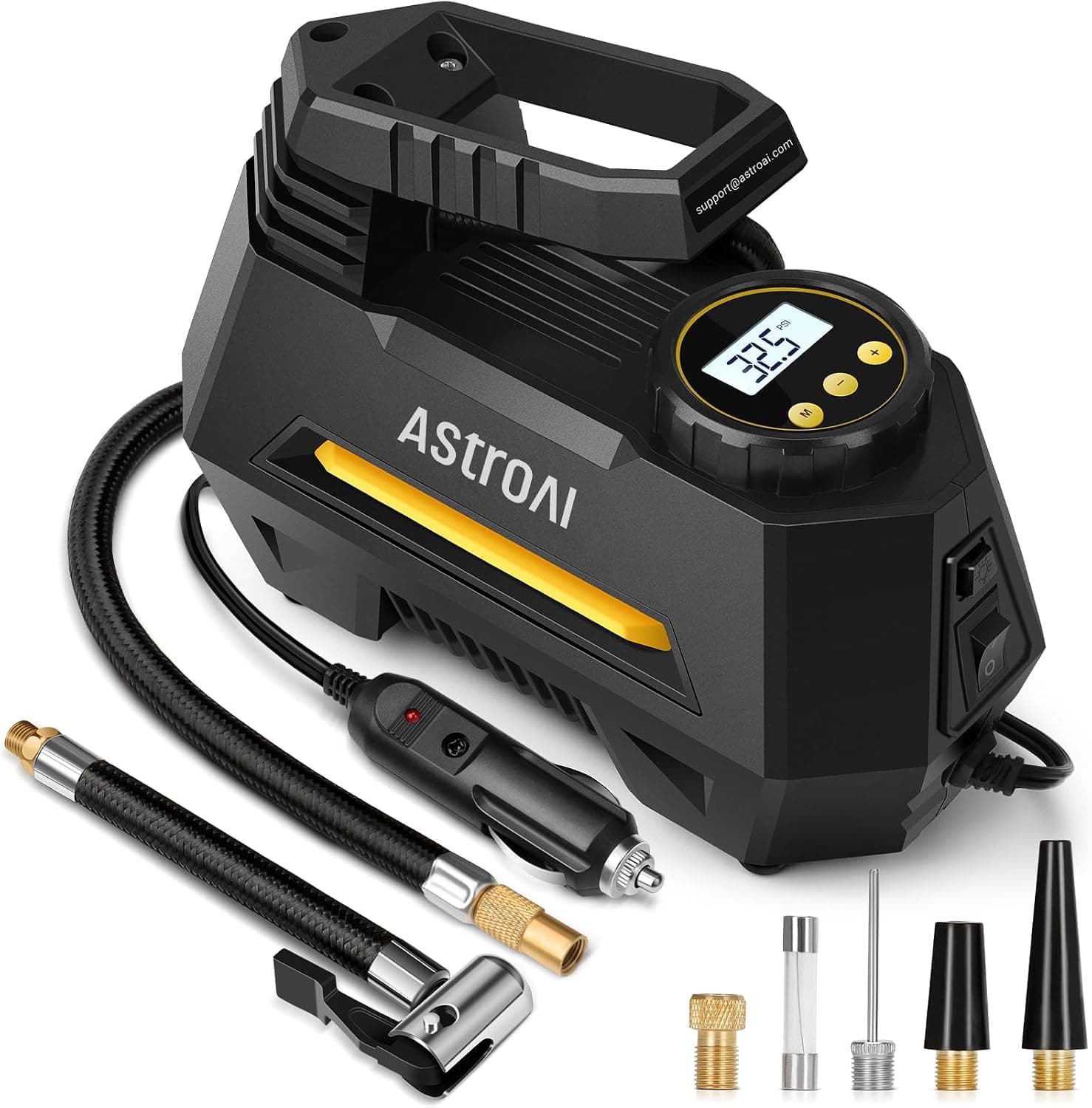
A corded 12V inflator with an auto shut-off, a digital gauge and a stated 9.8 foot cord, which is long enough to reach both wheels of a bike parked beside a car without moving anything. No battery means nothing to keep charged and nothing to go flat in a drawer.

Works in its favor

  • Auto shut-off and a digital gauge, the two features that make an inflator work on a bicycle
  • A stated 9.8 ft cord, long enough to reach around a bike from a car socket
  • No battery to maintain, charge or eventually replace
  • LED light included

Worth knowing first

  • Useless away from a 12V socket, which rules out the roadside flat
  • No stated maximum pressure in the listing
  • The cord is one more thing to coil and store

Best for
A rider whose bikes travel by car, where a socket is always nearby and a battery is one more thing to forget.

Check it on Amazon
ROCGORLD R8 12V Inflator

ROCGORLD R8 12V Inflator

Key spec · 12V, dual digital screen

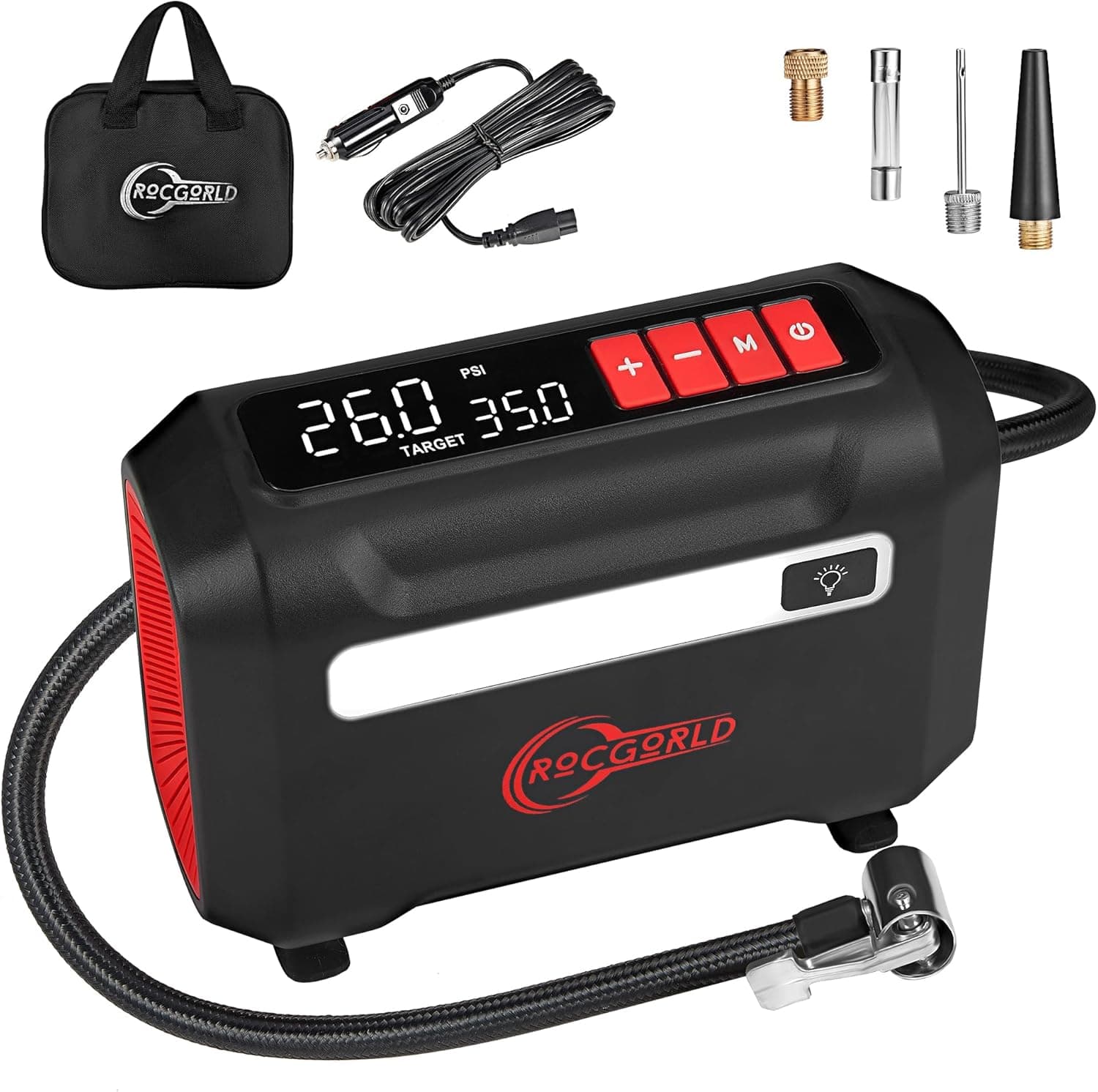
A 12V unit whose distinguishing feature per the listing is a large dual digital screen, which is genuinely useful if you are setting a pressure in a dim garage or without reading glasses. The listing claims faster inflation without publishing a rate to compare.

Works in its favor

  • A large dual digital screen, which is easier to read than the small displays common at this size
  • Runs from any 12V socket with nothing to charge
  • The listing positions it around speed, which suits larger volume tires
  • Straightforward corded operation with no battery to age

Worth knowing first

  • The listing does not state an auto shut-off, which matters most on a bicycle tire
  • No stated maximum pressure
  • The faster inflation claim is not backed by a published rate in the listing

Best for
Filling wider tires from a car socket where a readable screen matters more than portability.

Check it on Amazon
Inzeetor 12V Inflator, 150 PSI

Inzeetor 12V Inflator, 150 PSI

Key spec · 12V, 150 PSI, auto shutoff

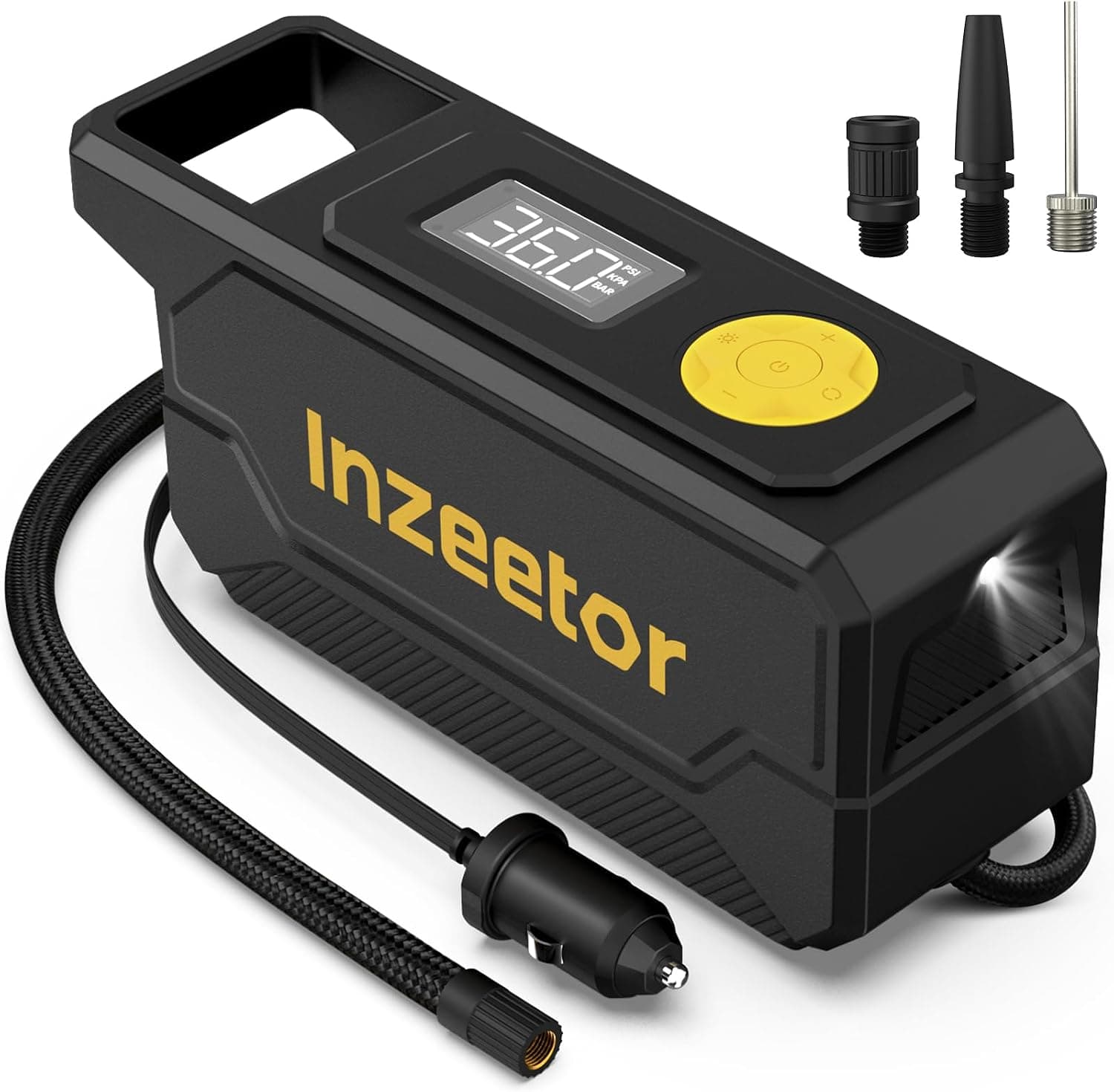
The corded option that states the most: 12V, a 150 PSI rating, an auto shutoff, a digital display and an emergency light. For a bike that gets aired up in a driveway rather than at the roadside, that specification covers everything the job needs.

Works in its favor

  • Auto shutoff with a digital display, so a target pressure can be set precisely
  • A stated 150 PSI rating covers narrow road tires
  • An emergency LED light, aimed at roadside car use but equally useful for a bike
  • Nothing to charge, so it works after a year in the trunk

Worth knowing first

  • Needs a 12V socket, so it does not solve a flat away from the car
  • The cord length is not stated in the listing
  • A corded unit is awkward to use on a bike hanging in a stand

Best for
Someone who tops up tires in a driveway beside a car and wants an exact number every time.

Check it on Amazon

Pumps and Portable Inflators: questions worth asking

For most riders, no. A floor pump is faster and its gauge is usually easier to read, but an inflator that stops at a set pressure does the same job and also fits in a pannier. If you have a bike with narrow high-pressure tires and you top them up weekly, a floor pump is still a pleasant thing to own.

Accurate enough to be consistent, which is what matters week to week. They are not laboratory instruments, and two pumps can disagree by a few psi. If you want to know a real number, a separate stick gauge is cheap and settles the argument.

You can, and it is worth being careful about. A car air line moves a large volume very quickly, and a bicycle tire holds very little, so it is easy to overshoot before the gauge catches up. Add air in short bursts and check between them.

Most inflators ship with a Schrader fitting, because that is what car tires use. A small brass adapter screws onto a Presta valve and converts it, costs very little, and lives permanently in a saddle bag. Check what is in the box before assuming.

Topping up a tire that has drifted down is quick on anything here. Filling a large tire from completely flat is where small units struggle, and that is when a stated duty cycle or dual cylinder design earns its place.

The jobs this gear belongs to

Links to Amazon on this page are affiliate links, which is how the site pays for itself. Prices and availability are not shown here because they change; check the listing. Affiliate Disclosure.